Some people first encountered Lord Hanuman not through scripture but through an image.
A framed photo in a grandmother’s puja room. An orange flag on the back of an auto-rickshaw. A painting on the wall of a Jaipur temple, vivid in red and gold, Hanuman carrying the Dronagiri mountain as if it were a fruit. Something about that image stayed.
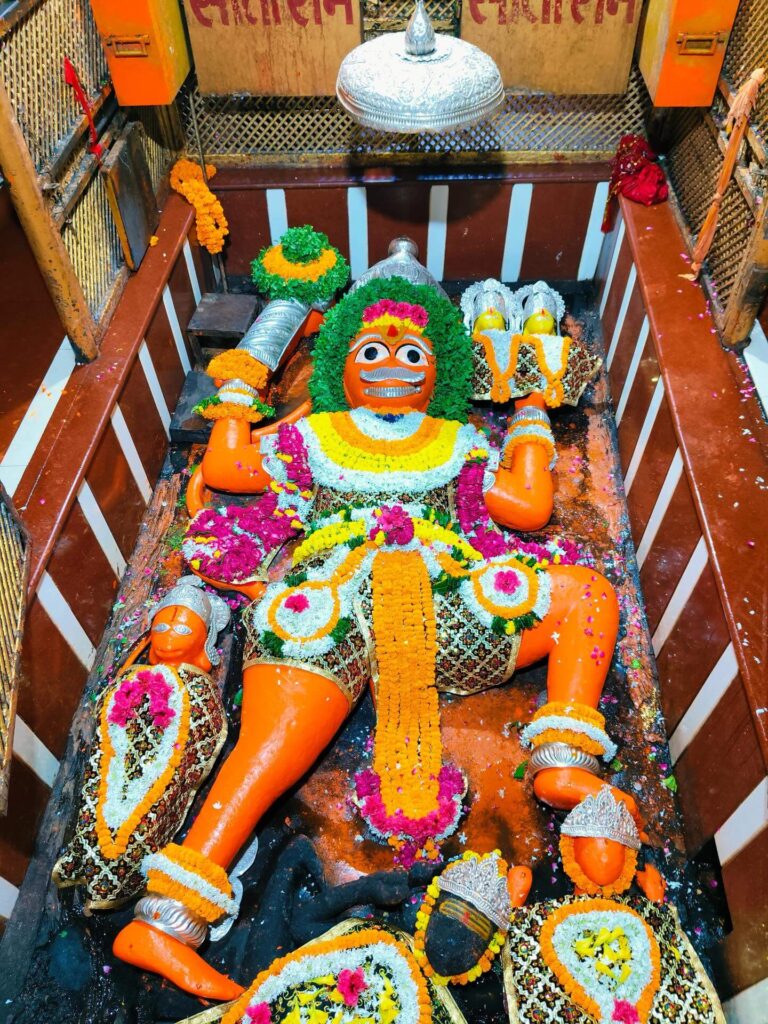
This page is a collection of free Hanuman Ji images for devotees who want high-quality photographs, wallpapers, and sacred artwork for their phones, desktops, puja rooms, or WhatsApp profiles. All images are carefully selected for authenticity and visual quality.
How Devotees Use These Images
The images in this collection are used in a few distinct ways, each with its own tradition behind it.
Mobile wallpaper (WhatsApp DP and lock screen): The most common use. Many devotees set an image of Hanuman Ji as their phone wallpaper or WhatsApp display picture — particularly a Panchmukhi (five-faced) Hanuman image for protection, or a devotional Rama-Sita-Hanuman composition. Looking at Hanuman Ji’s image first thing in the morning is considered an auspicious way to begin the day.
Puja room and home altar: A printed and framed image of Hanuman Ji becomes a permanent part of the home prayer space. The standard puja room image shows Hanuman Ji in his devotional pose (hands folded) or in his Veer (heroic) pose carrying the gada (mace). Both are traditionally appropriate for home worship.
Desktop background: For those who work from home or spend significant time on computers, a Hanuman Ji desktop background serves the same purpose as the puja room image — a visual anchor that brings the mind back to devotion during an ordinary day.
Sharing on festival days: Images shared on WhatsApp and social media spike around Tuesdays, Saturdays, and especially Hanuman Jayanti. Sharing a Hanuman Ji image with “Jai Bajrangbali” on a Tuesday morning is one of the most common expressions of devotion in digital India today.
Types of Hanuman Ji Images
Panchmukhi Hanuman (पंचमुखी हनुमान)
Hanuman Ji with five faces — one of his most powerful and protective forms. The five faces represent different divine aspects: Hanuman (east), Narasimha (south), Garuda (west), Varaha (north), and Hayagriva (above). This form is considered especially protective against negative energies and is frequently placed near entrances or in cars.
Veer Hanuman (वीर हनुमान)
The heroic Hanuman — muscular, carrying the gada and the Dronagiri mountain, tail raised. This is the most commonly depicted form in modern devotional art and represents the Hanuman who crossed oceans, burned Lanka, and brought the Sanjeevani.
Bhakta Hanuman (भक्त हनुमान)
Hanuman in devotional pose — hands folded, sometimes showing Ram and Sita in his heart (the famous “Chirharan” image where he opens his chest to reveal Ram’s name written on his heart). This form represents Hanuman’s quality of pure devotion without ego.
Ram Parivar with Hanuman
Ram, Sita, Lakshmana, and Hanuman together — the classic Ram Darbar image. This is the most auspicious image for a home puja room, representing the complete divine assembly.


Printing These Images
For home printing, use paper that’s at least 200 GSM for any image you plan to frame or place in a puja room. Standard A4 prints of high-resolution images from this collection will hold quality well at that weight. If you are printing a very large format (A3 or poster), take the image to a photo shop for better ink quality.
To make a complete devotional resource for your home, pair these images with the Hanuman Chalisa PDF in your preferred language — a framed Hanuman Ji image alongside a laminated Chalisa is a complete home prayer setup.
The Meaning Behind the Images
Every detail in traditional Hanuman imagery carries meaning. If you want to truly understand who Lord Hanuman is and the significance of each form depicted, read our complete guide. The gada he carries represents the power to destroy evil. The mountain he lifts represents the readiness to go to any length for someone in need. The open chest showing Ram’s name represents the quality of having only one thing inside.
For devotees who use these images as part of their daily puja, exploring the meaning of the Hanuman Chalisa alongside these images deepens the connection further — the images show you what the verses are describing.
You can also listen to our audio recordings of the Hanuman Chalisa while spending time with these images in your prayer space. 🙏
Jai Bajrangbali!