Forty verses. Written in a language scholars considered beneath dignity. Composed, by the most popular account, in a Mughal prison cell.
The story of how the Hanuman Chalisa came to be written is almost as remarkable as its eventual reach. It did not begin in a great temple or a royal library. It began in the particular circumstances of one man’s imprisonment — a poet-saint named Goswami Tulsidas who refused to perform miracles on command and was thrown in chains for it.
That refusal became the prayer. Those chains became the Chalisa.
Today, more than 450 years later, an estimated billion people know those forty verses by heart. They are recited in homes, temples, hospitals, prisons, and examination halls. They play from the speakers of auto-rickshaws and from phones tucked under pillows. The prayer that Tulsidas composed in captivity has become the most daily-used religious text in the world’s most populous country.
How that happened — the historical context, the specific moment of composition, the deliberate choice of language — is what this article covers.
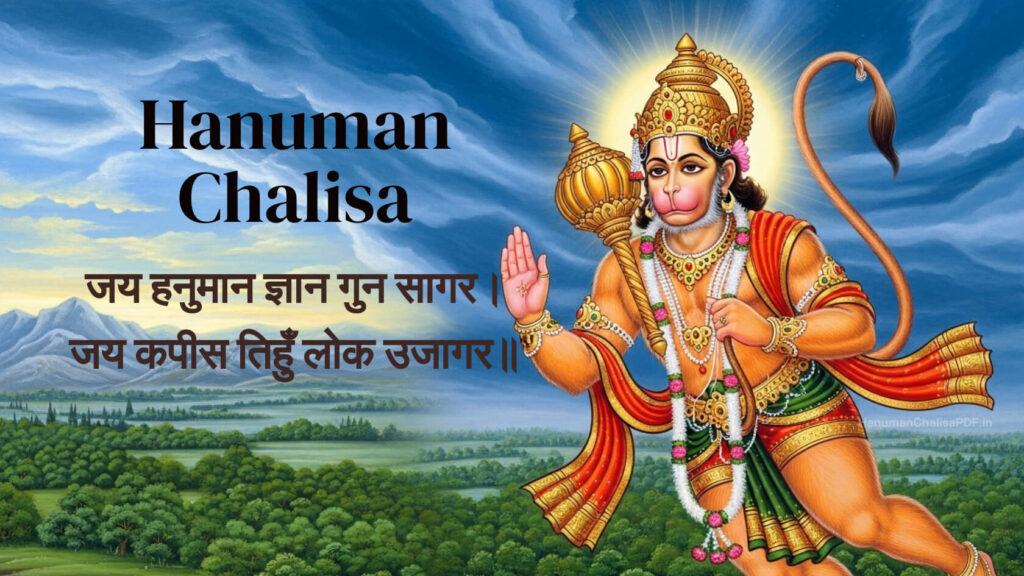
When Was Hanuman Chalisa Written?
Goswami Tulsidas composed the Hanuman Chalisa around 1574 CE (Vikram Samvat 1631), during the reign of Emperor Akbar. The prayer was written in Awadhi, the common spoken language of that era in North India, making it accessible to people from all backgrounds — rich or poor, educated or not.
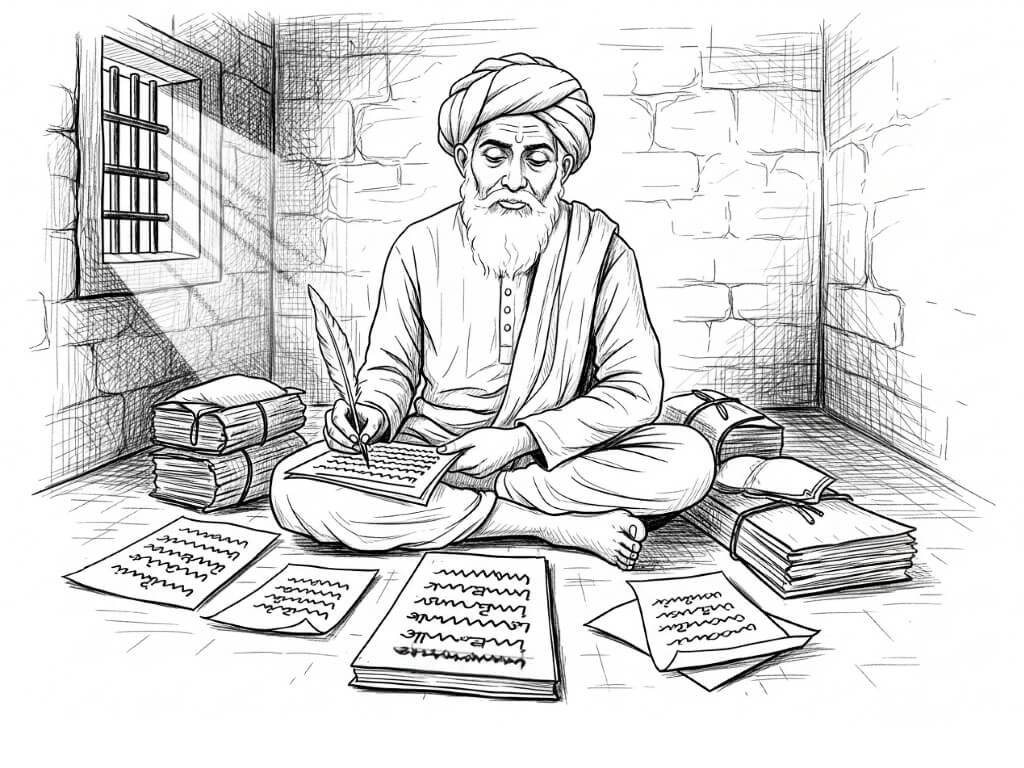
Tulsidas was approximately 62 years old when he composed this 40-verse devotional prayer. The name “Chalisa” itself comes from the Hindi word for forty (चालीस), referring to its 40 chaupais (verses).
Did Emperor Akbar Really Imprison Tulsidas?
According to popular legend, Emperor Akbar imprisoned Tulsidas at Fatehpur Sikri to test whether his claims of seeing Lord Ram were genuine.
Akbar reportedly said, “If your God is real, let him save you.” Tulsidas, undeterred, spent the 40 days of his imprisonment composing one verse each day in praise of Lord Hanuman — and these 40 verses became the Hanuman Chalisa.
It is said that on the 40th day, a massive army of monkeys descended on Fatehpur Sikri, causing enough chaos that Akbar released Tulsidas immediately.
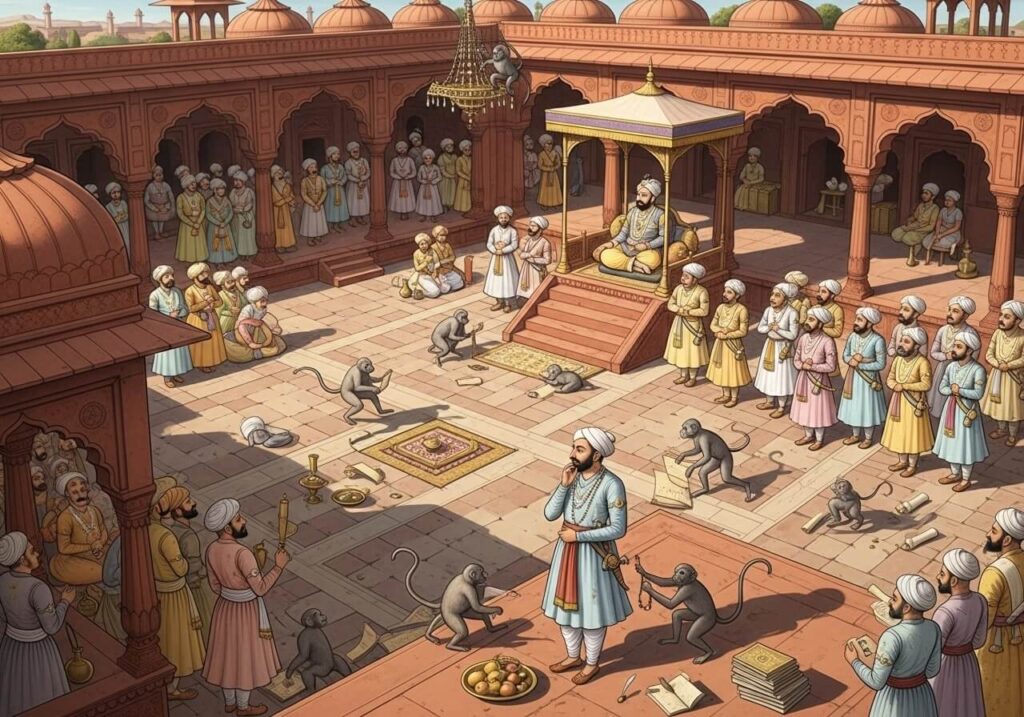
While historians debate the literal truth of this legend, the Akbar-Tulsidas story is one of the most beloved narratives in Indian devotional tradition and has been depicted in numerous films, plays, and artworks.
Why Awadhi? The Radical Choice That Made the Chalisa Universal
The single most consequential decision Tulsidas made in composing the Hanuman Chalisa was not the subject matter or the imagery — it was the language.
Sanskrit was the established language of Hindu religious texts. The Vedas, the Upanishads, the Mahabharata, the Ramayana of Valmiki — all were in Sanskrit. Sanskrit was the language of scholars, priests, and upper-caste households. A farmer in the Awadh countryside almost certainly could not read or understand it.
Tulsidas wrote in Awadhi (अवधी) — a dialect of Hindi spoken in the Awadh region of present-day Uttar Pradesh. It was the language of that farmer. Of the merchant in the bazaar. Of the widow keeping her evening lamp burning. Of the soldier far from home.
This choice was radical enough that some contemporary scholars criticized him for it. Sacred things, they argued, should be in sacred language. Tulsidas disagreed. He had already made the same choice with the Ramcharitmanas — his retelling of the Ramayana in Awadhi — and the popular reception of that work told him everything he needed to know about who religious literature was actually for.
The result was a prayer that required no intermediary. No priest to translate, no scholar to explain. Anyone who spoke Awadhi — which meant most of North India’s population — could understand it directly. Anyone could memorize it. Anyone could recite it. This was not incidental to the Chalisa’s spread. It was the mechanism of its spread.
If you want to follow the word-by-word meaning of each chaupai as Tulsidas actually wrote it, the Awadhi origins are part of understanding why certain phrases carry the weight they do.
The Chalisa’s Journey from Varanasi to the World
Tulsidas spent most of his later life in Varanasi — the city he considered his spiritual home. The temple he founded there, the Sankat Mochan Mandir (संकट मोचन मंदिर), still stands. It is said he composed this prayer and others like the Hanuman Ashtak while in Varanasi, the city where the divine felt closest to the everyday.
The Chalisa’s spread across India happened gradually, through the same channels through which all folk literature moves: oral tradition, temple recitation, and, eventually, manuscript copies. By the 19th century, it had reached virtually every corner of the subcontinent and every language community. Today, it exists in authoritative translations in every Indian language.
The Gulshan Kumar and Hariharan audio recording in the early 1990s accelerated what centuries of oral tradition had built — suddenly the Chalisa was heard in cars, shops, and festivals in a way that had never been possible before. That recording alone may have introduced more people to the Chalisa in a decade than all prior centuries combined.
For the broader cultural impact of the Chalisa — how it shaped Indian society, devotional practice, and even modern popular culture — that story continues in our cultural context guide. And if you want to recite the prayer that came from all this history, you can download the Hanuman Chalisa PDF free in Hindi, English, and 10 other languages. 🙏
Hanuman Chalisa: The Ultimate Prayer
To understand the power of the Hanuman Chalisa, we first need to know about Hanuman ji himself.
In Ramayana, Hanuman is Ram Bhagwan’s most devoted follower. As the son of वायु देव (Vayu Dev) – the wind god – he possesses incredible strength, wisdom, and devotion.
Lord Hanuman perfectly balances power with humility. This makes him the ideal आदर्श (role model) for devotees.
Symbolic Representation: Hanuman represents several important spiritual qualities:
- ब्रह्मचर्य (Brahmacharya) – spiritual discipline and celibacy
- भक्ति (Bhakti) – pure devotion to God
- सेवा (Seva) – selfless service to others
- साहस (Sahas) – courage in difficult times
These qualities inspire millions of devotees worldwide.
Structure and Composition of Hanuman Chalisa
The हनुमान चालीसा (Hanuman Chalisa) has a beautiful structure:
- 2 opening dohas – introductory couplets
- 40 chaupais – main four-line verses
- 1 concluding doha – closing couplet
Total: 43 lines that tell Hanuman ji’s complete story.
The prayer begins by honoring the गुरु (Guru). Then it describes Hanuman’s divine qualities, his Ramayana adventures, and his role as our protector.
Devotional Impact
The Chalisa serves many spiritual purposes:
- Protection and Strength: Devotees recite it during tough times. They believe हनुमान जी (Hanuman ji) protects them from नकारात्मक शक्तियां (negative energies) and बाधाएं (obstacles).
- Mental Peace: The rhythmic chanting calms the mind. It reduces चिंता (anxiety) and improves एकाग्रता (concentration).
- Spiritual Empowerment: Regular practice gives inner शक्ति (strength) and साहस (courage) to face life’s challenges.
Regional Traditions
- North Indian Traditions: In North India, people worship हनुमान (Hanuman) as बजरंग बली (Bajrangbali) – the mighty protector. वाराणसी (Varanasi’s) संकट मोचन मंदिर (Sankat Mochan Temple) was founded by तुलसीदास जी (Tulsidas ji) himself. It remains a major भक्ति केंद्र (devotion center).
- South Indian Anjaneya Worship: South India calls him अंजनेय (Anjaneya) – focusing on his divine birth and spiritual qualities. तमिलनाडु (Tamil Nadu), कर्नाटक (Karnataka), and आंध्र प्रदेश (Andhra Pradesh) temples have unique वास्तुकला (architecture) and रीति-रिवाज (ritual practices).
- Western and Eastern Regional Practices: Different regions developed their own हनुमान पूजा (Hanuman worship) styles. But the core भक्ति भाव (devotional spirit) of the चालीसा (Chalisa) remains the same everywhere.
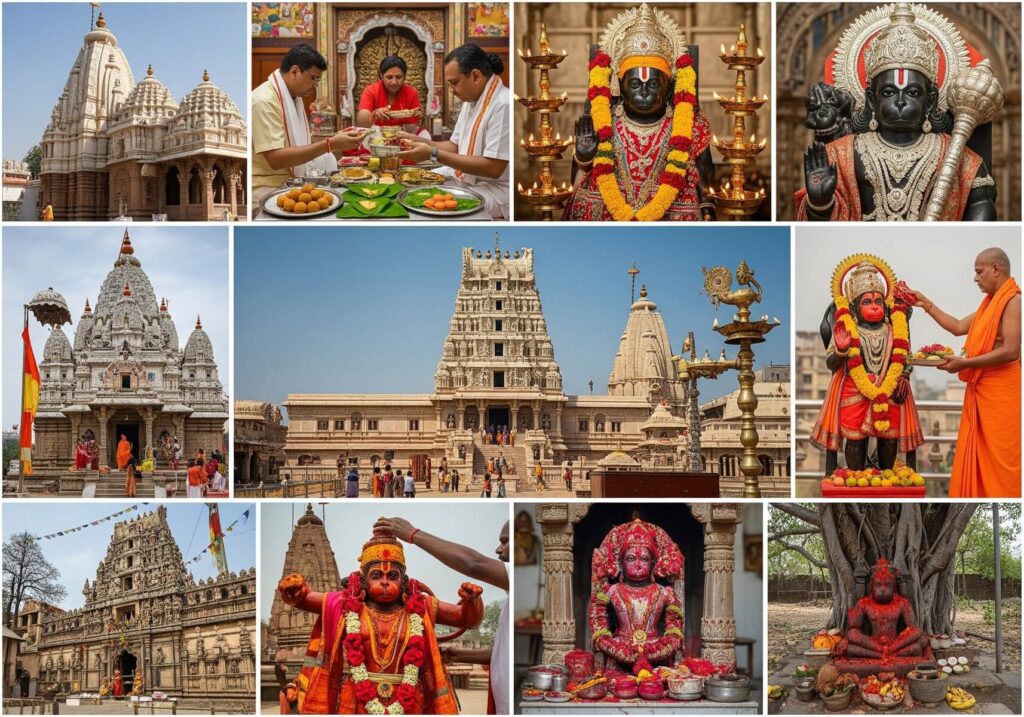
Sankat Mochan Legacy: Temple, Vows, and Planetary Relief
The Sankat Mochan Temple in Varanasi maintains a living link to Tulsidas. People gather there to chant the Chalisa and ask for help with personal and planetary troubles, including Shani. This blends temple practice, astrology, and daily prayer in a way many Indians find natural and helpful.